
Three things on Four Thousand Weeks
This is about a book my mother had me read

We’re back!
Housekeeping notes: This Monday, paid subscribers got this month’s ET Read Home, a monthly book club of sorts. I wrote about one of my favorite books, The Master and Margarita.
With that! Onto news, Jews, and views.
NEWS
I thought I was going to have two little bullets featuring my own work in this section this week but neither is ready so I have none. But just imagine the wealth of content I’ll have for you next week!
From Slate: “The story of Megyn Kelly isn’t just about a once promising broadcast star who chose radical partisanship over journalism. It’s the story of how two American institutions, the Republican Party and the news industry, have warped and withered over the span of the last decade.”
From Reuters: “Poland will seek answers about how a former minister wanted on abuse of power charges managed to travel from Hungary to the United States, a foreign ministry spokesperson said on Monday, after Warsaw’s hopes of bringing him to trial were thwarted.”
From The Philadelphia Inquirer: “Trump nominates Doug Mastriano to serve as ambassador to Slovakia as supporters mount write-in campaign for Pa. governor.” Is there not enough going on in Bratislava right now?
MY VIEWS ON…
…three takeaways from Four Thousand Weeks!
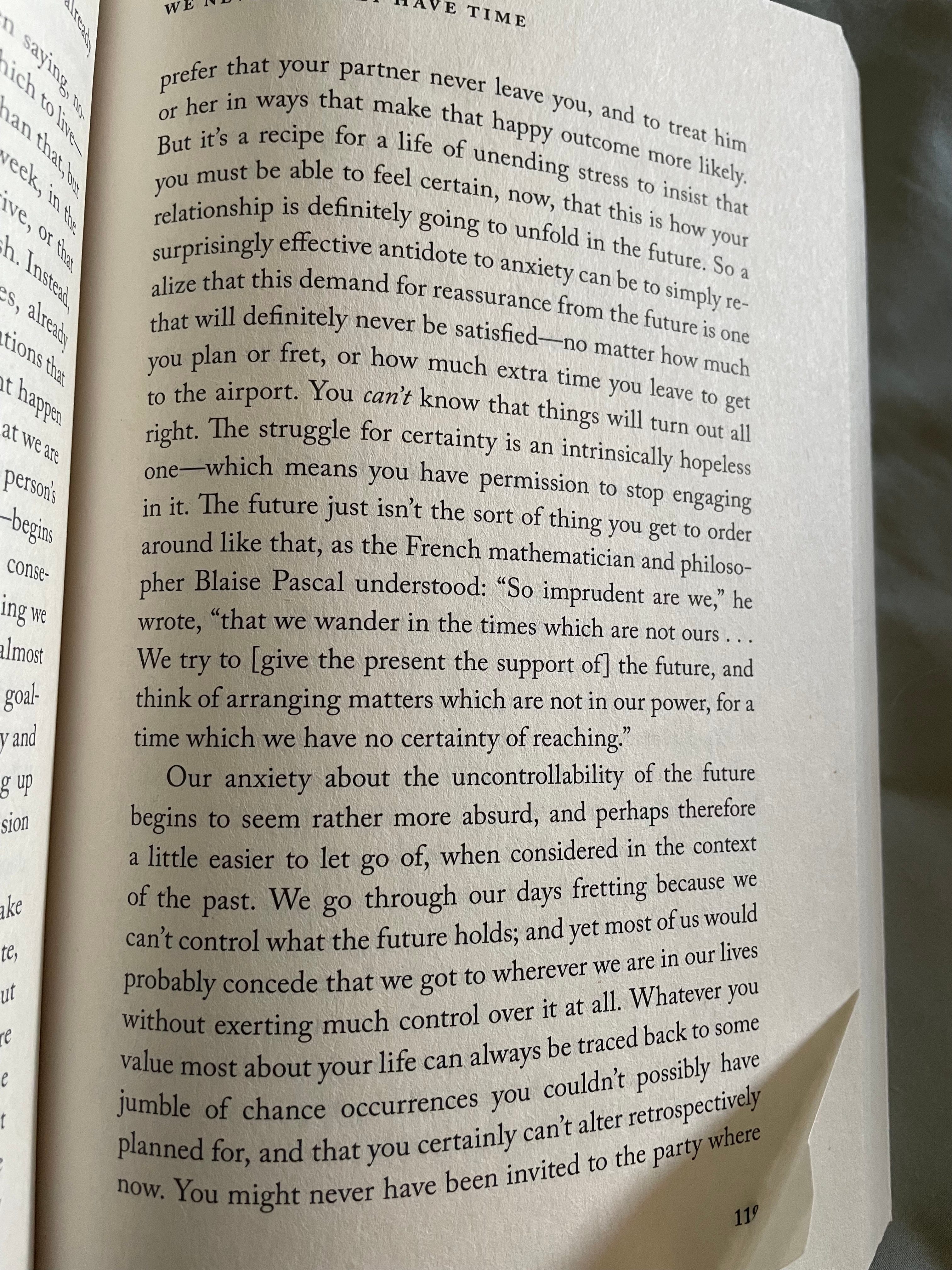
I don’t really read self-help or time management books but my parents were visiting this weekend and my mom gave me a copy of Four Thousand Weeks: Time Management for Mortals by Oliver Burkeman. I read it in two days, which is to say I really recommend it. It’s not really about time management. It’s about coming to terms with how short your life is; how all the things you mean to get done will never get done; and that in the grand scheme of things very little that you do really Actually Matters so you should probably try to figure out what matters to you. There’s more to it but that is the quick summary. But here are three things that stood out to it for me that I wanted to share with you. If this sounds profound and helpful: great! Read the whole book! If you think it sounds banal: it’s better when he writes it! Read the whole book!
The way to feel better and more focused and present is not to force yourself to try to feel better and more focused and present. I am a natural worrier and worst-case-scenario-go-to-er, and there is so much to feel bad about but I do not want to wallow in self-pity. I have been trying to work on that by staying positive and looking on the bright side and—it turns out that self-flagellating for not being happier isn’t the key to happiness or staying present in the moment or anything else. Burkeman writes against focusing on the future (more on that in a bit), but that the antidote isn’t to yell at ourselves to drink in the here and now or to be grateful or to be happy. We should instead try to notice our thoughts. Oh, now I’m sad. Oh, now I’m worrying again. By the time you’ve noticed how you’re feeling in that terrible moment, the moment is gone. Maybe the feeling is, too. Or not, but at least you’re less afraid of it.
Plans are just statements of intent. I started reading chapter 7 about people who get to the airport early only to worry about the plane taking off only to worry about logistics when they land and quickly went from thinking “oh, this is just like my dad” to “oh, no—this is just like me.” Worrying like this, Burkeman writes, is an attempt to lasso the future. But the future can’t be controlled like that. Life will turn out worse in ways we can’t imagine and also better in ways we couldn’t possibly have predicted or planned. I found this to be a very useful reminder. That the story you tell yourself about the good things coming your way will likely have to change but the story of the doom and gloom very well may, too. So much has been taken out of my control this year. I don’t need to know what is going on in your individual life, reader, to know that so much has been taken out of yours, too. Burkeman isn’t saying that we shouldn’t try to plan. But he does insist that we understand that these plans don’t actually mean anything beyond what we would like to happen.
In the grand scheme of things, our little accolades don’t matter. Burkeman makes the point that the lifetime of Henry VIII was just five 100-year-olds ago. Human civilization is going by in a blink. Most of us won’t be remembered, including the people we now, in this moment, think will be (he uses the example of Steve Jobs). And so rather than fretting over getting everything done and being the most productive and important, we should do what matters to us. I found this very affirming in that I do think that I do, mostly, spend time on what matters to me and have largely been able to feel proud of not just my career but also my life even if “freelance journalist and author focused on Jews” isn’t what I foresaw for myself. Now, mere hours after I read this book did I hear myself say aloud that I sometimes feel badly that my bylines this year haven’t been more diversified but that I have tried to make peace with it because I have a baby and a husband who is sick? Listen. Let’s focus on what really matters to you instead.
…AND SOME STUFF ABOUT JEWS
From JTA: “The Department of Government Efficiency’s cancellation last year of the majority of federal humanities grants, including to several Jewish projects, was unlawful and unconstitutional, a federal judge ruled Thursday.”
Also from JTA: “Abraham Foxman, the longtime leader of the Anti-Defamation League who for decades was the last word in post-Holocaust Jewish fury and forgiveness, has died at 86.”
Last one from JTA: “Kristof column alleging Israeli abuse of Palestinian prisoners sparks outrage, scrutiny and debate among Jews”
From CNN: “Hamas militants and their allies raped, assaulted and sexually tortured their victims during and after the October 7, 2023 terror attack on southern Israel ‘to maximize pain and suffering,’ a landmark new report has concluded”
From LitHub: “A New Language: On Primo Levi’s Translation of Kafka”
From the Times of Israel: “Ministerial panel to vote on bill that would bar citizenship for non-Orthodox converts”
From the Washington Post: “EU puts sanctions on Israeli settlers after Hungary drops Orban’s veto”
From the New York Times: “Defendant in Boulder Antisemitic Attack Is Sentenced to Life in Prison”
From RNS on a giant of Jewish Studies: “There’s nothing unusual about the honorary doctorate the Reconstructionist Rabbinical College will grant at commencement next week to Hasia R. Diner — except one thing. Ever since she publicly renounced Zionism in an op-ed in the Israeli newspaper Haaretz 10 years ago, this leading historian of the American Jewish experience has been persona non grata in most institutional Jewish spheres.”
I loved the headline of this Forward op-Ed about the student pushback to Israeli President Isaac Herzog as JTS commencement speaker: “Debating Zionism is good for Jews, actually” (and the op-Ed itself is very good, too)
Also from the Forward: “Just as major Jewish leaders started working with the conservative movement — and burning bridges with liberals — MAGA has decided that Jews may not belong in their coalition after all”
One more from the Forward: “The student leaders of the campus Hillel at a small liberal arts school in Vermont have voted to rename the student group, moving to distance it from an international organization they say is too pro-Israel.”
To get a sense of a certain segment of discourse today, I invite you to read this Nation piece against the conflation of Judaism and Zionism and then check the surrounding social media response, the participants of which seem to be mad that a leftist Jewish person has acknowledged antisemitism and also at the concept of diaspora.
And then you can read this Jay Michaelson column on the Great Hardening.
-ET