

AI-stein
This is about a Jewish chatbot

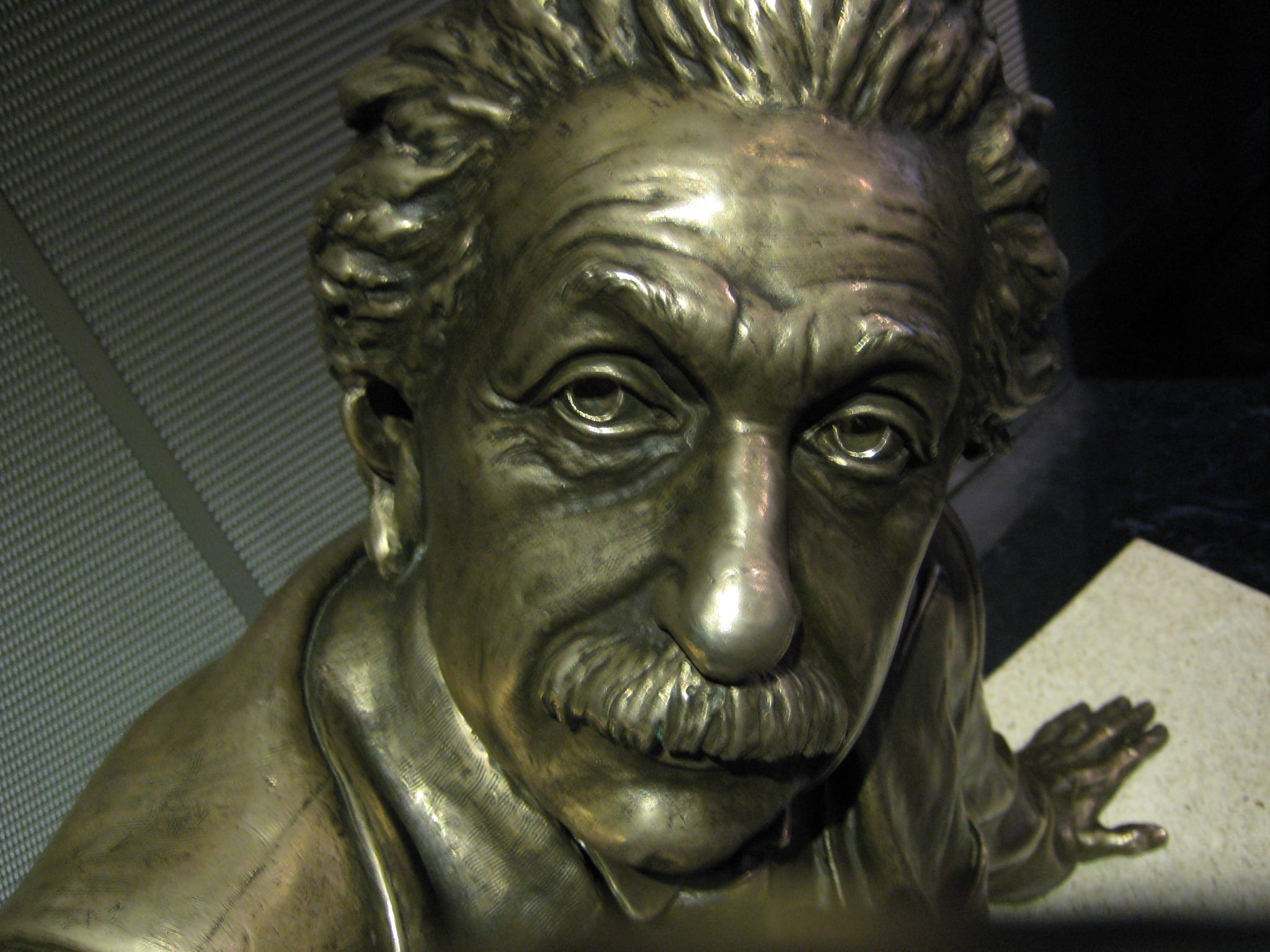
We’re back!
Housekeeping notes: Next Monday, paid subscribers will get this month’s ET Speak Home, a monthly mini interview.
With that! Onto news, Jews, and views.
NEWS
For the Forward, I wrote about one reason that Israel was so salient in New York’s Democratic primaries
Of course I’m going to share the Guardian’s Lalas takedown.
From CNN: “New book reveals how Trump compared himself to Mao, Stalin, Attila the Hun.” Oh, okay.
MY VIEWS ON…
…Jewish Lives and AI!
I was hoping to have one (1) other idea this week and so write about something besides how much I distrust AI again but it was this or how much I love the fanny pack my mom got me and how a beautiful part of motherhood is embracing the parts of Mom that you swore you’d never touch (that’s basically the piece).
Last week, I read this article about how the Jewish Lives series made a chatbot with which you can “chat” with several of the luminaries about whom Jewish Lives books have been published. I take the point that this is meant to be a fun way to get people to engage with Jewish Lives and the ideas therein. “Chat with the most fascinating Jews in history,” it promises. “Engage in a simulated dialogue with a virtual Einstein.”
I loved the one Jewish Lives biography I read (Berel Lang on Primo Levi) and so am not writing this as a knock on Jewish Lives. I tried to sit with why I had such a negative reaction to learning about this beyond general suspicion of AI. Was this really that different from one of those fun little interactive screens you’d come across in a history museum that tries to bring this character or that to life?
I have to admit that, of all the things for which people can use AI, this is relatively low on the list of offenses and that I am being a little unfair. But I think my opposition comes from the fact that you can’t actually talk to great minds from then to ask what they would think of now. You have to try to reason it out yourself. This tool does that for you by reading and grappling with their work. I asked the bot, masquerading as Einstein, “What do you think of Israel today?” The bot answered, “If we have chosen the path of narrow nationalism and force over organized cooperation and mutual respect, then I fear we have endangered the very spiritual and ethical survival of our people.”
Einstein didn’t actually tell me that, though. A footnote pointed to an actual Einstein quote that read, “We Jews must show above all that our own history of suffering has given us sufficient understanding and psychological insight to know how to cope with this problem of psychology and organization: the more so as no irreconcilable differences stand in the way of peace between Jews and Arabs in Palestine. Let us therefore above all be on our guard against blind chauvinism of any kind,” and so it’s not like the answer came from nothing. Also, I have now read this quote, which maybe I wouldn’t have without the bot.
But I guess what I’m struggling with is that I didn’t read the quote and draw that conclusion about today by myself. I didn’t read the book and have that insight. Maybe it’s not so different from an interview with a scholar where they tell me what Einstein would have said or thought, or reading an article by someone who poured through Einstein’s writings and wrote a conclusion about how he’d view present events.
On the other hand, maybe any of those would have still allowed for something curious and wondering—something human—that is lost between the bot and me. Another footnote told me that Einstein said “My awareness of the essential nature of Judaism resists the idea of a Jewish state with borders, an army, and a measure of temporal power” but also considered himself a Zionist. That’s interesting! There’s a tension there! I thought about asking Einstein how he could believe both things, but I remembered I wasn’t talking to Einstein, and I couldn’t, and that the bot could relay intellectual and emotional contradictions, but has never and could never feel them.
…AND SOME STUFF ABOUT JEWS
In his Substack, Marc Tracy wrote about Jews voting for “anti-Israel” progressive candidates in New York City.
In the Forward, Abe Silberstein argues that “A growing caucus in the House of Representatives is targeting Muslims, and American Jews should be deeply concerned.”
I am a week late to this but in Haaretz, Amira Hass writes, “The local KKK hopes its violence will spur an angry Palestinian reaction to justify murdering more Palestinians and expelling the majority of them to Jordan, Syria and Lebanon.” The piece is about that, but also about how shocking extremism is made possible by bureaucracy and decorum and people who do not wish to know.
From eJewish Philanthropy: “The Taub Center, the Israeli social policy think tank, released its annual “Picture of the Nation” report today — and it is not a pretty picture for much of Israeli society.”
From JTA: “Antisemitic incidents in Germany remained elevated in 2025, fueled by rise in far-right cases: Report”
Also from JTA: “For months, Rabbi Yehuda Kaploun, the Trump administration’s special envoy to monitor and combat antisemitism, has worked to fold the State Department’s Holocaust envoy office into his own, a congressional source told the Jewish Telegraphic Agency.”
Finally, historian Lila Corwin Berman in the Philadelphia Inquirer: “The history of American Jews exposes the fundamental questions of citizenship”
-ET
"The face of Albert Einstein" by ricardodiaz11 is licensed under CC BY 2.0.
Emily, Thanks for links to interesting reading. Unable to read the full Haaretz article (need to check my local library for digital access). Do the Israelis in question identify as KKK, or does Amira Hass see so many similarities between the West Bank thugs and American KKK that they might as well call themselves KKK?